
Air Quality Monitoring Services: 7 Warning Signs Every Building Owner Should Know
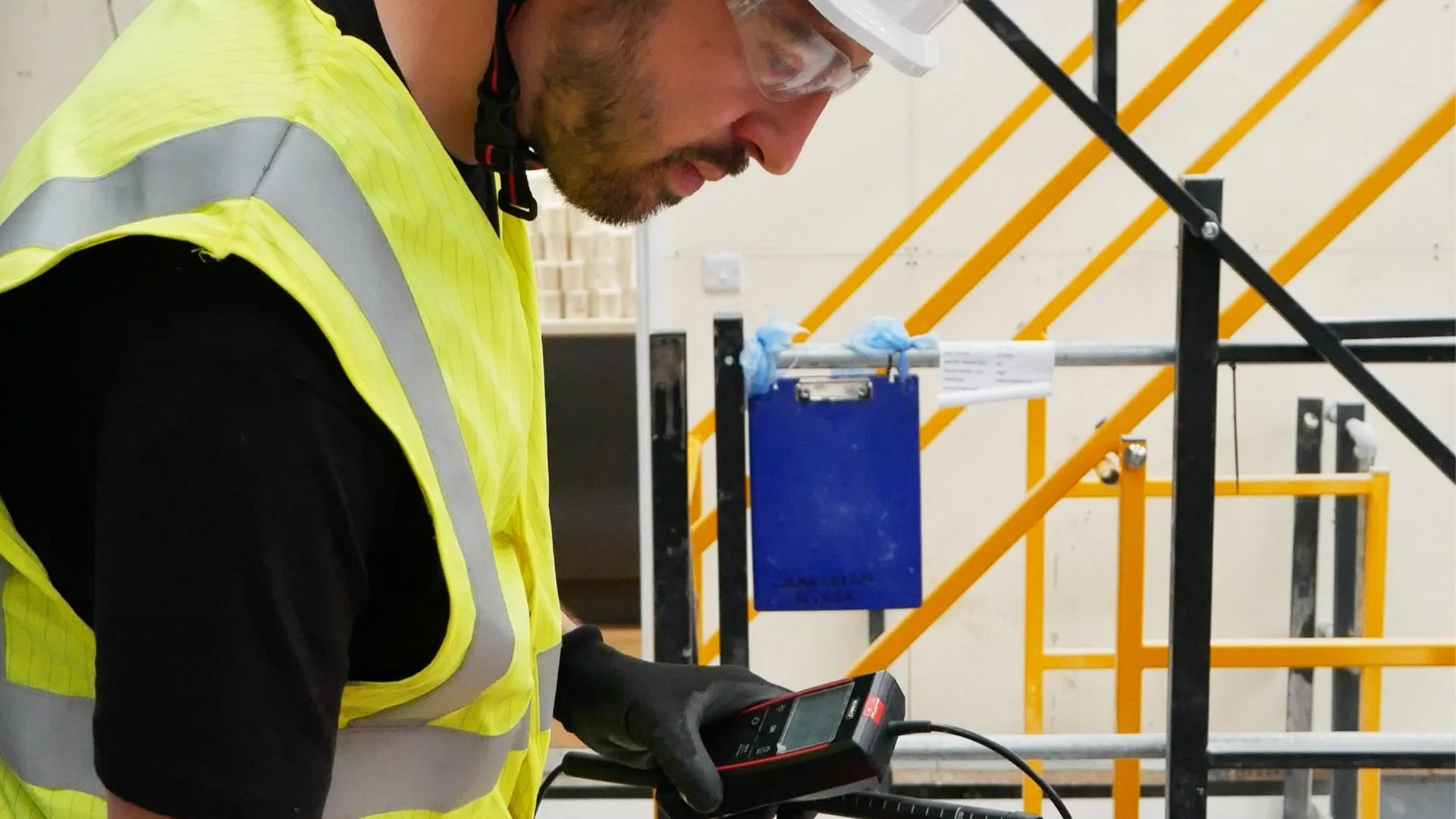
When we think about building safety, our minds immediately jump to fire alarms, structural integrity, or security systems. But there is one invisible threat that most building owners consistently overlook the air inside their own building.
Indoor air quality is not a minor comfort issue. It directly impacts the health of every person who spends time in your building, the productivity of your workforce, your legal compliance standing, and ultimately the value and reputation of your property. The World Health Organization estimates that 3.8 million people die prematurely every year from illnesses linked to indoor air pollution. Yet most buildings have no active monitoring in place at all.
The problem is that bad air quality does not announce itself. There is no smoke, no alarm, no visible damage. It accumulates silently through poor ventilation, building materials, cleaning chemicals, equipment emissions, and outdoor pollution seeping indoors. By the time occupants start complaining, the problem has often been building for months or even years.
This is exactly why professional air quality monitoring services exist and why knowing the warning signs is something every responsible building owner needs to take seriously.
Here are the 7 warning signs your building may have a serious air quality problem, and what you should do about each one.
Warning Sign 1: Occupants Are Frequently Getting Sick or Reporting Similar Symptoms
If multiple people in your building are regularly experiencing headaches, dizziness, eye irritation, a persistent dry cough, sore throats, or fatigue and these symptoms tend to improve when they leave the building you are likely dealing with what is formally known as Sick Building Syndrome (SBS).
Sick Building Syndrome is directly linked to poor indoor air quality. Common culprits include elevated levels of carbon dioxide from inadequate ventilation, volatile organic compounds (VOCs) off-gassing from furniture, flooring, adhesives, and cleaning products, mould spores circulating through HVAC systems, and fine particulate matter from printing equipment or nearby construction.
What makes this warning sign particularly serious is the pattern. One employee feeling unwell could be anything. But when three, five, or ten people report the same symptoms at the same time and feel better on weekends or when working remotely the building itself is the common variable.
Professional air quality monitoring services can deploy sensors and conduct assessments that identify the specific pollutant causing the issue, rather than guessing. This allows you to target the solution precisely instead of spending money on broad fixes that may not address the root cause.
Warning Sign 2: Your Building Has Visible Mould or a Persistent Musty Smell
Visible mould growth is an obvious red flag. But many building owners make the mistake of treating mould as a surface problem cleaning it off walls or ceilings and considering the job done. What mould on your surfaces actually tells you is that there is a moisture and air circulation problem in your building that goes much deeper than the visible patch.
Mould releases spores into the air constantly. These spores are invisible to the naked eye and can travel through your entire ventilation system, affecting spaces far removed from where the visible growth is located. Exposure to mould spores is linked to respiratory infections, allergic reactions, asthma attacks, and in cases of toxic mould like Stachybotrys (black mould), serious neurological symptoms.
A musty or damp smell even without visible mould is equally concerning. It indicates mould or bacterial growth is occurring somewhere in the building behind walls, inside ductwork, under flooring, or in ceiling cavities where you cannot see it.
Air quality monitoring services use specialised equipment to test for mould spore concentrations in the air, identify moisture levels, and trace the origin of contamination. This gives you a clear picture of the full extent of the problem, not just the visible surface.
Warning Sign 3: Your Building Has Poor or Ageing Ventilation
Ventilation is the lungs of your building. When it is working properly, it continuously cycles out stale, pollutant-heavy air and replaces it with fresh air. When it is not working properly or when it was never designed to handle the current occupancy levels pollutants accumulate rapidly.
Signs of ventilation problems include rooms that feel stuffy or humid regardless of the season, condensation forming on windows, inconsistent temperatures across different areas of the building, and HVAC systems that have not been serviced or upgraded in several years.
Carbon dioxide is one of the most telling indicators of poor ventilation. In a well-ventilated space, CO2 levels should sit around 400–600 parts per million (ppm). In a poorly ventilated office with high occupancy, levels can climb to 1,500–2,500 ppm or higher. At those concentrations, occupants experience measurable cognitive decline, reduced decision-making ability, and fatigue even if they cannot identify the cause.
If your building was built or last refurbished more than 10–15 years ago, the ventilation system was almost certainly not designed for today's occupancy density, equipment loads, or energy-efficient sealed building designs. Air quality monitoring services can assess whether your current ventilation is adequate and identify exactly where it is failing.
Warning Sign 4: Recent Renovation, Refurbishment, or New Fit-Out Work
If your building has recently undergone renovation, refurbishment, or a new fit-out, you have almost certainly introduced a significant temporary air quality problem whether you are aware of it or not.
Fresh paint, new carpeting, newly installed furniture, adhesives, sealants, and treated timber all off-gas VOCs for weeks and sometimes months after installation. Some of the most common VOCs found in newly renovated buildings include formaldehyde, benzene, toluene, and xylene all of which have documented health effects ranging from eye and throat irritation at low exposure levels to liver damage and increased cancer risk at sustained high levels.
Construction dust containing silica particles is another serious concern. Fine silica dust, if inhaled consistently, causes silicosis an irreversible and progressive lung disease. If renovation work involved any cutting, grinding, or drilling of concrete, brick, or stone, silica contamination of the indoor air is a real possibility.
The standard advice of "open the windows for a few days" after renovation is not sufficient for a commercial building. Professional air quality monitoring services can test VOC and particulate levels post-construction to confirm when it is genuinely safe for occupants to return and work at full capacity not just when the paint smell has faded.
Warning Sign 5: Your Building Is Located Near an Industrial or High-Traffic Area
The outdoor environment immediately surrounding your building has a direct and significant impact on indoor air quality. Buildings located near busy roads, motorways, industrial estates, manufacturing facilities, airports, ports, or construction projects are continuously exposed to elevated levels of outdoor pollutants that enter through ventilation systems, windows, doors, and even through the building fabric itself.
Key pollutants from traffic and industry include nitrogen dioxide (NO2), particulate matter (PM2.5 and PM10), carbon monoxide, and a range of industrial chemicals depending on the nature of nearby operations. PM2.5 particles are particularly dangerous because they are small enough to penetrate deep into lung tissue and enter the bloodstream.
Many building owners assume that being indoors provides adequate protection from outdoor pollution. Research consistently shows this is not the case. In buildings with standard ventilation, indoor PM2.5 levels can reach 60–80% of outdoor levels. In tightly sealed buildings with poor filtration, pollutants can actually concentrate at higher levels indoors than outside.
If your building sits in a high-pollution zone, ongoing air quality monitoring services are not a luxury they are a fundamental part of responsible building management. Real-time monitoring allows you to adjust ventilation, filtration, and occupancy in response to outdoor pollution spikes rather than reacting after exposure has already occurred.
Warning Sign 6: Occupants Are Reporting Persistent Odours With No Obvious Source
Unexplained or persistent odours in a building are one of the most commonly ignored warning signs. It is easy to dismiss a smell as temporary or assume it is coming from an obvious source like a kitchen or cleaning cupboard. But when occupants report smells that they cannot trace chemical odours, a faint burning smell, a sweet or acetone-like scent, or a persistent sewage-like smell these are often direct indicators of a specific air quality issue.
Chemical smells often point to VOC off-gassing from materials or equipment. A burning or electrical smell may indicate overheating components releasing combustion byproducts. Sewage odours can indicate sewer gas including hydrogen sulphide entering the building through dry drain traps or cracked plumbing. Sweet chemical odours in certain industrial settings can indicate the presence of specific solvents.
Each of these odour types corresponds to a different pollutant with different health implications. Air quality monitoring services use gas detection equipment to identify the specific chemical compounds present in the air, giving you an accurate diagnosis rather than a guessing game.
Ignoring persistent odours is not just a comfort issue. It is a health and liability issue. If an employee suffers a health event connected to an air quality problem you were aware of but did not act on, the legal and financial consequences can be severe.
Warning Sign 7: You Have No Air Quality Monitoring in Place at All
This final warning sign is perhaps the most important and the most common. The single biggest indicator that your building may have a serious air quality problem is simply that you have no way of knowing whether it does or not.
Most commercial buildings in operation today have no continuous air quality monitoring whatsoever. Building managers rely on complaints from occupants, periodic visual inspections, or annual HVAC servicing to manage air quality, none of which provides the real-time, data-driven visibility needed to identify problems before they become serious.
Modern air quality monitoring services provide continuous sensor-based monitoring of key parameters including CO2, VOCs, particulate matter (PM2.5 and PM10), temperature, humidity, carbon monoxide, and nitrogen dioxide. Data is typically available through a dashboard in real time, with automated alerts when any parameter exceeds safe thresholds.
The cost of implementing professional monitoring is a fraction of the cost of responding to a serious air quality incident whether that is a legal claim from affected employees, regulatory enforcement action, a deep remediation project, or the reputational damage of a building being associated with occupant illness.
What to Do If You Recognise Any of These Warning Signs
If any of the seven warning signs above apply to your building, the next step is straightforward: commission a professional air quality assessment.
A professional air quality monitoring service will conduct a full baseline assessment of your building, identify the specific pollutants present and their sources, measure concentrations against recognised health and regulatory standards, and provide a clear prioritised action plan. Depending on findings, this may involve installing continuous monitoring sensors, recommending ventilation upgrades, advising on materials or products to replace, or referring specific issues to specialist remediation contractors.
The key is not to wait. Air quality problems do not resolve themselves. They persist, compound, and expose your occupants to ongoing health risk while exposing you to growing legal and financial liability.
Final Thought
Every building owner has a duty of care to the people inside their building. That duty does not stop at fire safety or structural maintenance; it extends to the air those people breathe every single day. With professional air quality monitoring services, you have the tools to meet that duty confidently, proactively, and with the data to back every decision you make.
If you are not sure where your building currently stands, that uncertainty is itself the answer. It is time to find out.