
Is Your LEV System Legally Compliant? What UK Employers Must Know in 2026
Every year in the United Kingdom, thousands of workers develop serious, often life-changing respiratory conditions as a direct result of exposure to airborne contaminants in the workplace. Dust, fumes, vapours, mist, and gases many of them invisible to the naked eye are silently damaging the lungs of workers in factories, workshops, laboratories, woodworking facilities, welding shops, and construction sites across the country.
Local Exhaust Ventilation more commonly known as LEV is the primary engineering control used to prevent this. It is also one of the most heavily regulated areas of workplace health and safety in the UK. And in 2026, with enforcement activity increasing and regulatory expectations continuing to rise, the question every employer must be asking is a simple but critical one: is your LEV system legally compliant?
If you are not entirely sure of the answer, this guide is for you.
What Is a Local Exhaust Ventilation System?
A Local Exhaust Ventilation system is a form of engineering control designed to capture airborne contaminants dust, fumes, vapour, gases, mist at or near the point where they are generated, before they can enter the breathing zone of workers or spread into the wider workplace environment.
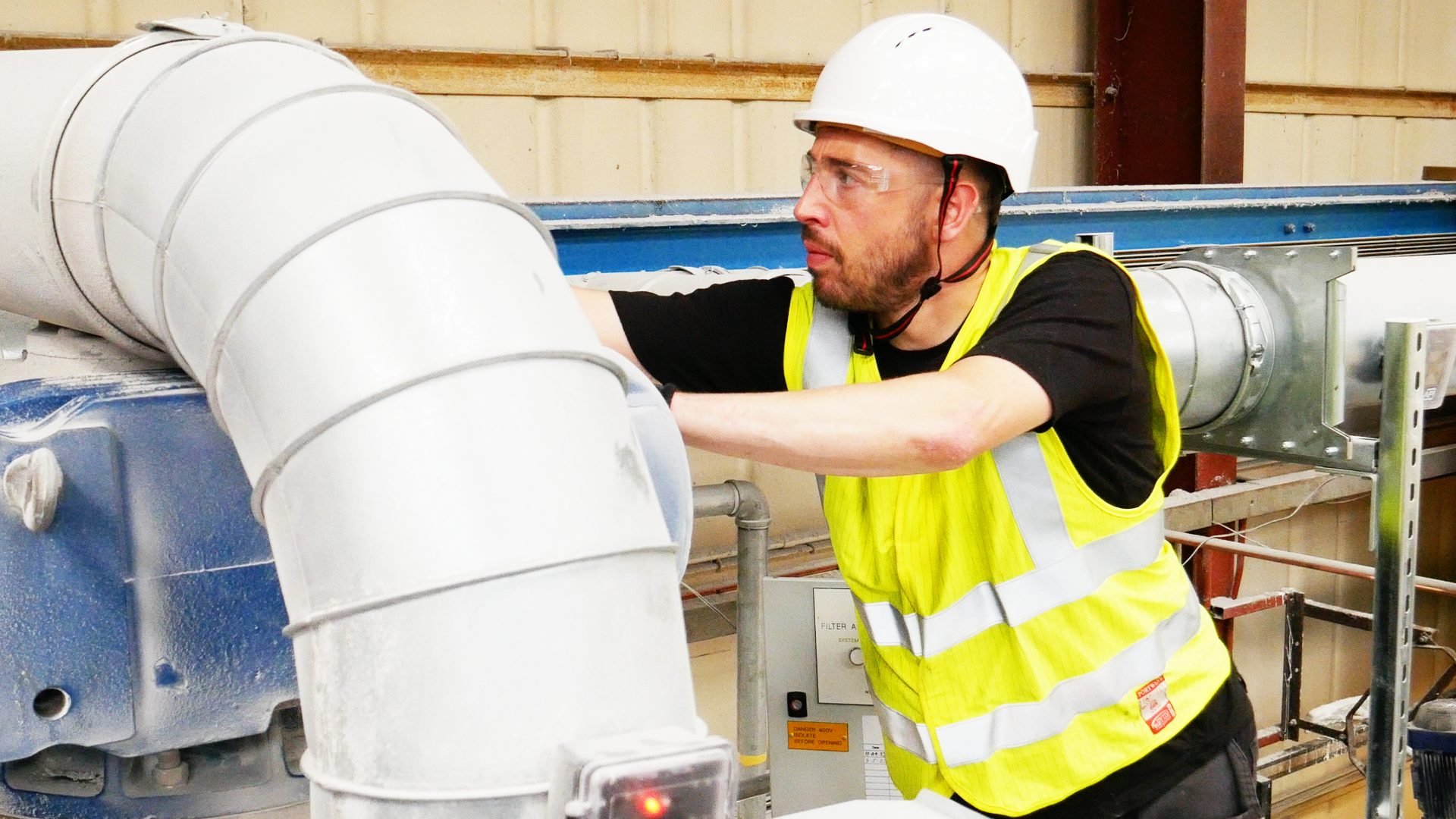
A typical LEV system consists of several interconnected components. The hood or enclosure sits closest to the contaminant source and captures the airborne hazard. The ducting transports the captured contaminant away from the work area. The air cleaner or filter removes the hazardous particles before the air is either recirculated or discharged externally. The fan or air mover provides the airflow that drives the entire system. Each component plays a critical role, and a failure in any one of them can compromise the entire system's effectiveness and your legal compliance.
LEV systems are used across a wide range of industries. Woodworking, metalworking, pharmaceutical manufacturing, food production, automotive refinishing, chemical processing, welding, soldering, and laboratory environments all rely on LEV to protect workers from substances hazardous to health.
The Legal Framework What UK Law Requires
The legal basis for LEV compliance in the UK sits primarily within the Control of Substances Hazardous to Health Regulations 2002, universally known as COSHH. These regulations place a clear and unambiguous duty on employers to prevent or adequately control workers' exposure to substances hazardous to health.
Under COSHH, where it is not reasonably practicable to prevent exposure entirely, employers must put in place adequate control measures. The regulations establish a clear hierarchy engineering controls such as LEV take priority over administrative controls or personal protective equipment like face masks. In other words, if airborne hazards are present, LEV is not optional. It is the expected and required solution.
Beyond COSHH, LEV compliance also intersects with the Health and Safety at Work Act 1974, which places a broad general duty on employers to ensure, so far as is reasonably practicable, the health, safety, and welfare of their employees. The Management of Health and Safety at Work Regulations 1999 add further requirements around risk assessment and the appointment of competent persons to oversee health and safety measures.
The Health and Safety Executive the HSE is the regulatory body responsible for enforcing these requirements. The HSE has published extensive guidance on LEV, most notably in its document HSG258 Controlling Airborne Contaminants at Work which sets out in detail what constitutes a well-designed, adequately maintained, and properly tested LEV system. This document is not legally binding in itself, but it represents the HSE's authoritative view of what compliance looks like in practice, and inspectors will reference it when assessing your systems.
The 14-Month Rule Thorough Examination and Testing
The single most important compliance requirement for most employers with LEV systems is the statutory duty to have those systems examined and tested at least once every 14 months.
This requirement is set out explicitly in Regulation 9 of COSHH, which states that any LEV system provided to control exposure to a substance hazardous to health must be maintained in an efficient state, in efficient working order, and in good repair. Where the system is used for a purpose listed in Schedule 4 of COSHH which covers the most hazardous processes such as blasting, grinding of metals, and work with certain chemicals the maximum interval between examinations is reduced to just 6 months.
The 14-month examination must be carried out by a competent person someone with sufficient knowledge, training, and experience to assess whether the system is performing as intended. This is not a job for a general maintenance engineer or an internal health and safety officer unless they have specific LEV expertise. The HSE expects the examiner to have a thorough understanding of LEV system design, airflow measurement, capture velocity assessment, and the specific hazards the system is controlling.
During the thorough examination and test, the competent person will typically measure the airflow at key points in the system, assess the condition of all components including hoods, ducting, filters, and fans, check that the system is achieving the capture velocities specified in its original design, and identify any deterioration or defects that could compromise performance.
Following the examination, a written report must be produced and retained by the employer for a minimum of five years. This report is your documentary evidence of compliance. If the HSE visits your premises following a complaint or incident, the first thing an inspector is likely to ask for is your LEV examination records. If you cannot produce them, you are exposed both legally and in terms of any insurance claims or civil litigation that might follow.
Common Compliance Failures Where Employers Go Wrong
Despite the clarity of the legal requirements, LEV compliance failures remain widespread. Here are the most common issues the HSE identifies during inspections and what they mean for your business.
Overdue examinations. The most straightforward failure the 14-month examination simply has not been done, or the records cannot be located. This is an immediate enforcement issue.
Using an incompetent examiner. Having an examination carried out by someone without the requisite expertise invalidates the process entirely. The competent person requirement is not a box-ticking exercise it has genuine substance, and the HSE will assess whether the examiner had the appropriate knowledge and experience.
Ignoring defects identified in previous reports. LEV examination reports frequently identify defects damaged ductwork, worn fan bearings, blocked filters, reduced airflow. If these defects are logged in a report and then not acted upon, the employer has documented evidence of a known hazard they chose not to address. In the event of a worker developing an occupational disease, this creates serious legal and financial exposure.
Modifications to systems without reassessment. LEV systems are designed for specific processes, specific contaminants, and specific airflow requirements. When a process changes new equipment, different materials, changed work layout the existing LEV system may no longer be adequate even if it is in perfect working order. Any significant change to a process or system requires a reassessment by a competent person.
No face velocity or airflow records. A compliant examination must include actual measured data, not just a visual inspection. Reports that lack flow measurements, capture velocity data, or static pressure readings are not adequate and will not satisfy an HSE inspector.
Relying solely on RPE as the primary control. Respiratory Protective Equipment face masks and respirators is a last line of defence, not a substitute for engineering controls. Employers who have not invested in LEV on the basis that workers wear masks are in breach of the COSHH hierarchy of controls and face enforcement action if inspected.
What Changed in Recent Years and What to Expect in 2026
The regulatory landscape around LEV has not fundamentally changed in its legal structure, but enforcement has intensified significantly. The HSE has increased the volume of proactive inspections in higher-risk industries, and its focus on occupational lung disease which it has publicly identified as the most significant cause of work-related ill health in Great Britain means LEV compliance is firmly in the crosshairs.
In 2026, employers should also be aware of increasing scrutiny around wooden dust and silica dust specifically. Both substances are known carcinogens, and the HSE has made no secret of its intention to pursue enforcement action including prosecution — in workplaces where adequate controls are not in place. If your business involves woodworking or the cutting, grinding, or drilling of stone, concrete, or similar materials, your LEV compliance position needs to be robust and demonstrably evidenced.
The HSE's Fee for Intervention scheme also means that non-compliant employers face direct financial consequences even without prosecution. Where an inspector identifies a material breach of health and safety law, the employer is charged for the inspector's time at a rate of over £160 per hour in 2026. A single inspection visit that identifies LEV compliance failures can result in a bill of several hundred to several thousand pounds, before any consideration of formal enforcement notices, improvement notices, or prosecution.
Steps to Confirm Your Compliance
If you are unsure whether your LEV systems are fully compliant, here is a straightforward checklist to work through.
First, identify every LEV system in your workplace and confirm when each was last examined. If any examination is overdue or approaching its 14-month anniversary, arrange the examination immediately.
Second, locate your examination records. These should be filed and accessible. If records cannot be found, contact your LEV service provider or the competent person who carried out the previous examination to obtain copies.
Third, review the most recent examination report for each system. Check whether any defects, recommendations, or required actions were identified. If they were, confirm that each one has been addressed and documented.
Fourth, consider whether any processes in your workplace have changed since the last LEV examination. New materials, new equipment, relocated workstations, or changed work practices may mean an existing LEV system is no longer adequate for its intended purpose.
Fifth, verify that the person or organisation carrying out your LEV examinations is genuinely competent. Ask for evidence of their qualifications, experience, and familiarity with the specific hazards in your workplace.
Finally, ensure your workers are trained to use LEV systems correctly. A system that is never switched on, used incorrectly, or bypassed by workers is not providing any protection and you remain legally liable for the consequences.
The Cost of Non-Compliance
The financial and reputational consequences of LEV non-compliance extend far beyond an HSE fine. Occupational lung diseases asthma, silicosis, chronic obstructive pulmonary disease, mesothelioma, occupational cancers are permanently disabling and often fatal. Civil claims from former employees who develop these conditions can run into hundreds of thousands of pounds. Employers' liability insurance does not always provide full protection, particularly where deliberate or reckless disregard for the law can be demonstrated.
And beyond the financial consequences, there is the human reality. A worker who develops silicosis or occupational asthma will carry that condition for the rest of their life. It will affect their ability to work, their quality of life, and in many cases, their lifespan. No business can put a price on that.
Final Thought
LEV compliance is not a complex or burdensome requirement. It requires a competent examination at the right intervals, a functioning system that is properly maintained, and documented evidence that both of those things are happening. The legal framework is clear, the HSE's guidance is comprehensive, and the consequences of failure are severe.
In 2026, there is no excuse for non-compliance. If you have any doubt about the status of your LEV systems, the right time to act is now not after an inspection, and certainly not after someone gets hurt.